01 / Write the experience before styling it
We begin by mapping the guest route and the operational route. They overlap, but they should not compete. Arrival, host point, first view, table choice, service rhythm and departure each need a clear role.
This map gives creative decisions a purpose. A change in ceiling height can slow the guest down; a framed kitchen can communicate energy; a quieter material transition can signal a more intimate zone.
02 / Let operation strengthen atmosphere
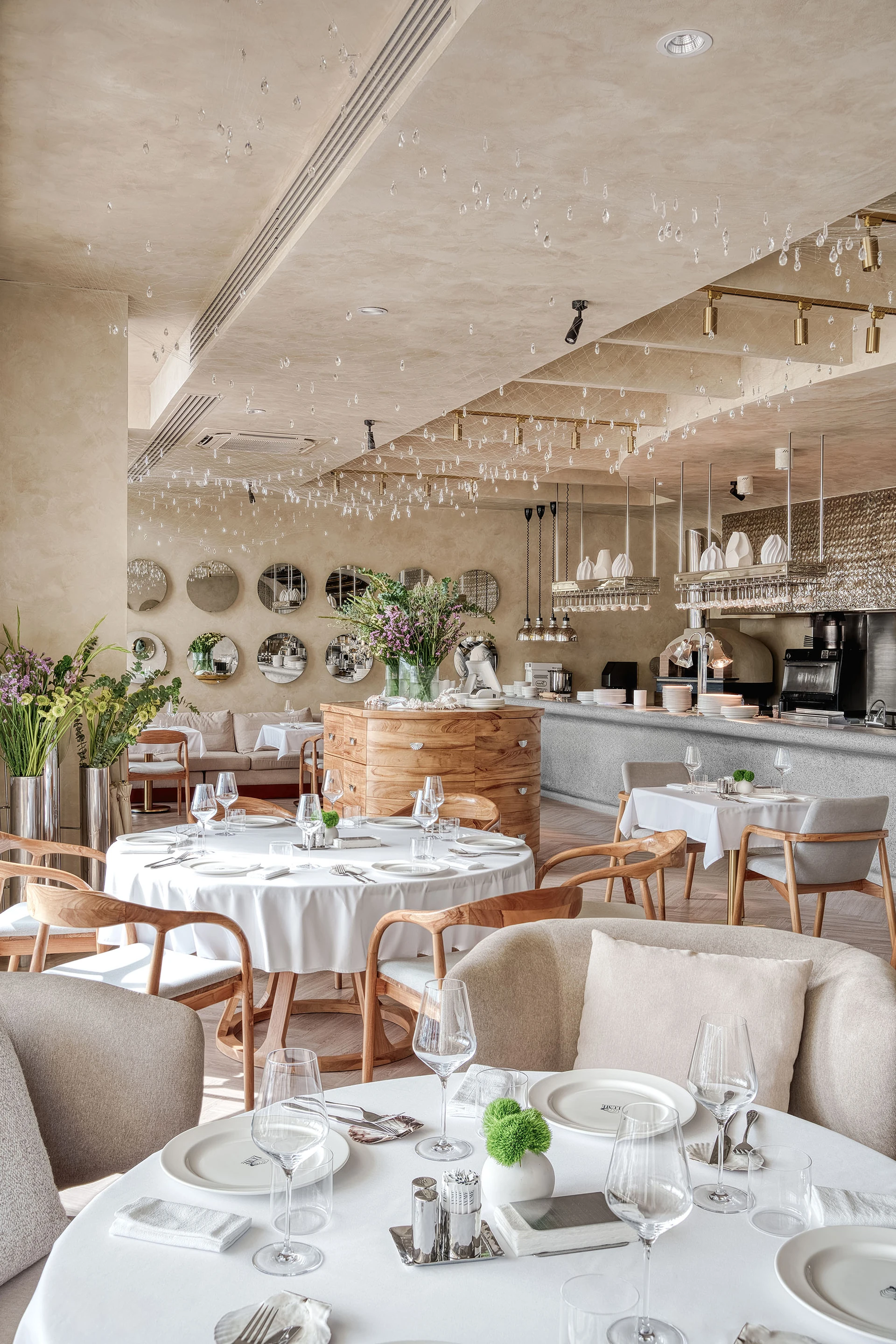
Good hospitality planning reduces friction for staff without making the room feel engineered. Sightlines, storage, acoustic absorption, lighting control and service access should disappear into the architectural language.
The most convincing venues do not separate the photogenic moment from daily performance. A strong identity must survive a full service, cleaning, changing daylight and repeated use.
- Give the entrance one unmistakable first impression
- Use lighting to change energy through the day
- Design service routes before decorative layers
- Test every signature moment at operating capacity
03 / Build recognition without a theme
Identity can come from proportion, rhythm, craft and a precise material idea rather than literal references. This gives a venue character without making it dependent on novelty.
The aim is a place guests can describe after leaving: not only how it looked, but how it made the evening unfold.